Showing posts with label museum. Show all posts

Wednesday, 24 April 2013

Preview of the catalogue

This Friday the Carmichael Watson Project object catalogue, based on Carmichael's collections at the West Highland Museum and the National Museums of Scotland, will be going live!

Over the past year the team have been locating, researching, photographing and cataloguing all the objects, and a select few were featured in blog entries. Altogether the collections contain more than 440 objects from the smallest coin to a large carved stone slab.

Here's a hint at what others objects are in the catalogue: 
Carved Stone Slab, National Museums of Scotland

Swatches of tartan cloth, National Museums of  Scotland

Copper Alloy Brooch, West Highland Museum

Silver Luckenbooth Brooch, West Highland Museum

Copper cup, West Highland Museum

Spanish coin and Roman coin, West Highland Museum

Snàithle, West Highland Museum

Basket-hilted sword, West Highland Museum

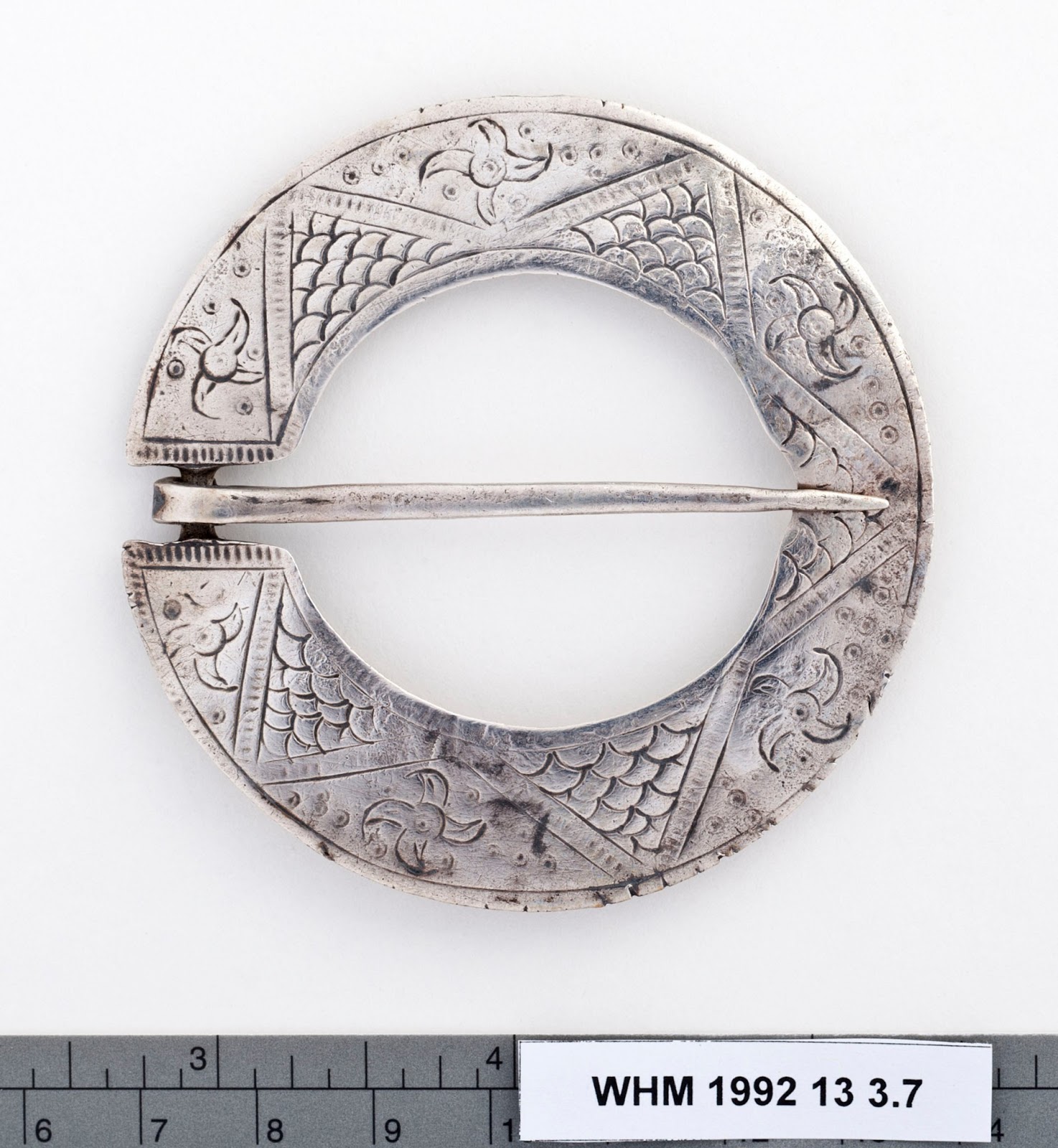
Silver Ring Brooch, West Highland Museum
Images
NMS objects © National Museums of Scotland
WHM objects  © Carsten Flieger 

Monday, 1 October 2012

Objects in Focus: Flint Arrowheads


Flint arrowheads can be dated to the Neolithic and Bronze Ages and were used very commonly throughout Britain and Ireland. The flint was shaped by knapping and pressure-flaking, both processes involve reducing the flint by striking the stone. The knapping would reduce the flint to the desired size and pressure-flaking would achieve the desired shape and refine the projectile point of the flint. A number of the examples in these photos are barbed and tanged making them easier to attach to a shaft.  
As well as their practical use, flint arrowheads were heavily associated with the fairies in Scotland and were called saighead shìth. It was commonly believed that these weapons were thrown at cattle and humans by the fairies in an effort to capture them. Any person or animal that was taken ill suddenly was thought to have been shot at and replaced with a changeling.
The flints were also used as protection against the fairies but, similarly to the St John's Wort Achlasan Chaluim Chille, they could only be found accidentally. Carmichael was informed that the fairies were always eager to get their arrowheads back and provides an account of his own experience in Carmina Gadelica ii:

The people say that a fairy arrow, especially the arrow of the fairy queen, cannot be safeguarded against the wiles of the fairies. The writer can confirm this in his own experience, having unaccountably lost, despite all possible care, the smallest and most beautifull shaped and coloured arrow-head he has ever seen, and that within a few hours after getting it!

As well as being used as protection, the flints were used in cures. Water in which the arrowheads were dipped would be given to a cow to remedy being shot at. Alternatively the water would be used to wash the wound inflicted or the stone itself was rubbed on the area.
 
The Carmichael Collection housed at the West Highland Museum has 18 flint arrowheads of various shapes, sizes and colours. If you happen to be in Fort William do visit the Museum, it's worth it!
   
Images
Copyright Carsten Flieger
References
Campbell, J.G. (2005) The Gaelic Otherworld, Edinburgh: Birlinn Press.
Carmina Gadelica ii, 346-7.

Thursday, 1 March 2012

Tracking Down Treasures

Last Sunday the team made their way through beautifully snowy glens to Fort William to carry out a significant piece of work for the project. Fort William is home to the West Highland Museum, where the majority of the artefacts collected by Alexander Carmichael are held. Indeed, the museum has looked after the collection for a long time, first taking it in as a loan from Michael Carmichael, one of Alexander's grandsons, in 1948 before it was gifted to the museum in 1992.

Domhnall Uilleam placing a winnowing riddle for Carsten to photograph


In addition to research, this phase of the project aims to catalogue all the objects collected by Carmichael. In order to make a useful online catalogue photographs are required, so we hired Highland photographer Carsten Flieger to work with us. Now, the collection is complicated enough, with Uist plaids, Jacobite tartans, bronze brooches, bone pins, fossils, wool carders, sea bean charms, oil lamps and swords to contend with without adding in the fact that a large proportion of the collection is on display. Luckily for us museum volunteer and former curator Sally Archibald had given up her time to help us identify objects in storage and carefully remove and replace objects on display. No mean feat given the weight of some of the display cases - it's not just the tango that takes two.

Guinevere proving the worth of a porridge breakfast with the charms display case


The variety of objects, their dispersal throughout the museum and the need to consult different lists compiled over the years made the task quite complicated, however we soon had a production line of sorts going. Working from the largest objects to the smallest, prioritising items on display and trying to keep things made of similar materials together were key. Over the five days we were in Fort William, of the 200 or so items which were produced Carsten took over 300 photographs. What we've seen so far is first-class and we can hardly wait to see them all properly: ruddy-red tartans, shiny sea beans, ferocious flax combs. However, we're going to have to wait as we still have some objects to to photograph, which, now we have some experience, we know will probably take another two days.

Carsten and the bright lights making sure everything looks as it should

We are grateful to the West Highland Museum, especially manager Colleen Foggo for letting us work for as long as possible each day to get through the material and for being patient with us as we roved the different floors and rooms of the museum seeking out Carmichael-collected objects. We are indebted to Sally Archibald for the extraordinary energy and work she put into locating and identifying items.

Sally and Kirsty try to identify a brooch

The museum re-opens following its winter closure next week, so if you're in Fort William, do go in as it's well worth the time.

Stone whorls WHM 1992 13 2.4

Stone whorls WHM 1992 13 2.4
Stone whorls collected by Alexander Carmichael, held by West Highland Museum (ref. WHM 1992 13 2.4). [© carstenflieger.com]