Showing posts with label West Highland Museum. Show all posts

Wednesday, 24 April 2013

Preview of the catalogue

This Friday the Carmichael Watson Project object catalogue, based on Carmichael's collections at the West Highland Museum and the National Museums of Scotland, will be going live!

Over the past year the team have been locating, researching, photographing and cataloguing all the objects, and a select few were featured in blog entries. Altogether the collections contain more than 440 objects from the smallest coin to a large carved stone slab.

Here's a hint at what others objects are in the catalogue: 
Carved Stone Slab, National Museums of Scotland

Swatches of tartan cloth, National Museums of  Scotland

Copper Alloy Brooch, West Highland Museum

Silver Luckenbooth Brooch, West Highland Museum

Copper cup, West Highland Museum

Spanish coin and Roman coin, West Highland Museum

Snàithle, West Highland Museum

Basket-hilted sword, West Highland Museum

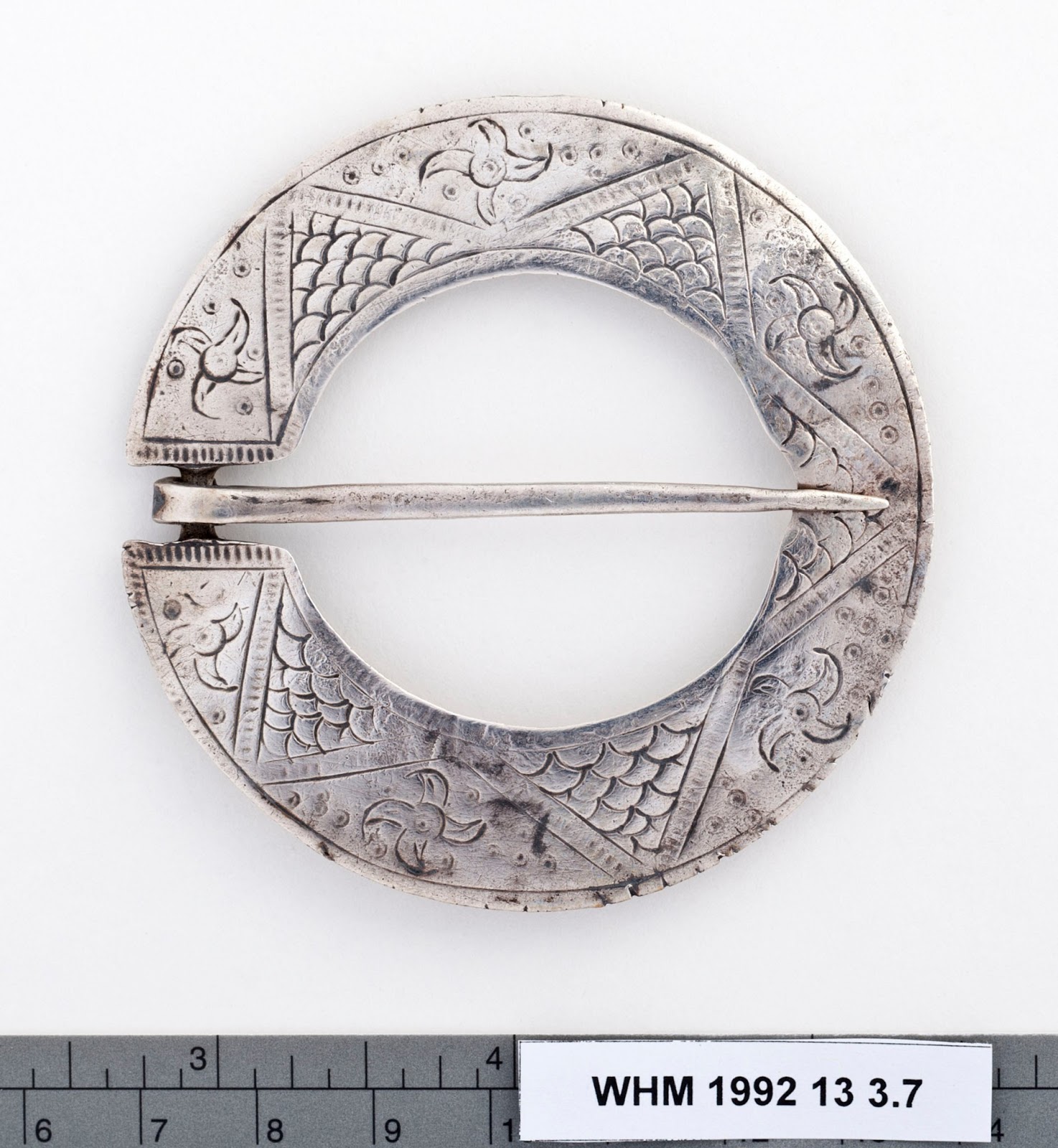
Silver Ring Brooch, West Highland Museum
Images
NMS objects © National Museums of Scotland
WHM objects  © Carsten Flieger 

Friday, 1 March 2013

Tartanology


The interest in and debate concerning clan tartans was kick-started by the famous Sobieski Stuart brothers, alleged grandsons of Bonnie Prince Charlie, John Hay Allen [John Sobieski Stolbert Stuart, Count d’Albanie] and Charles Hay Allen [Charles Stuart Hay Allen, Count d’Albanie (succeeding his brother)]. The pair were well known for engaging in all things Highland from wearing the traditional garb to hunting, writing poetry and collecting folklore.

The brothers edited and illustrated the famous Vestiarium Scoticum: from the Manuscript formerly in the Library of Scots College at Douay. With an Introduction and Notes, by John Sobieski Stuart that was published in 1842 by William Tait of Edinburgh. The book lists the clans from all over Scotland: Highlands, Lowlands and the Borders, ‘the order of Terteinis apperteinand unto ye chieff Hieland clannes’ and seventy-five colour plates illustrating the tartans of the clans listed.


Kilt from the Carmichael Collection, West Highland Museum
This impressive publication was based on an ancient manuscript the brothers possessed that was collated with a second manuscript from the library of the Monastery of St Augustine in Cadiz from 1571. Although in 1828 they displayed a 1721 Vestiarium manuscript to Sir Thomas Dick Lauder, this was not used as a source. 

The authority of all these texts was questioned and doubt cast over the brothers' integrity. A popular opinion was that the tartan manufacturers encouraged the publication as the popularity of tartan sky-rocketed from 1842Either way, be it author or editor/illustrator, these two brothers were behind what Telfer Dunbar believed to be ‘probably the most controversial costume book ever written’.

The label reads: Kilt Worn by one of the Sobieski Stuart brothers. Alex Carmichael. 
Carmichael, noted for his extensive collection of folklore, also acquired an extremely significant tartan collection, including a kilt worn by one of the Sobieski brothers. Telfer Dunbar, one of the leading Highland Dress experts, noted:

 “Without doubt the greatest collector of early tartans and dress was Alexander Carmichael – compiler of Carmina Gadelica. His fine specimens of pre-nineteenth-century tartans with their lovely colour combinations and interesting weaves are far removed from the “clan” tartans of later times. Without the work of Alexander Carmichael our knowledge of early specimens of tartan would be very slight indeed.”

The tartan collection, unfortunately, no longer exists as one entity. The West Highland Museum has tartan clothing and NMS, Edinburgh holds some the pre-nineteenth century tartan swatches mentioned above but the rest was scattered after Carmichael’s death. Telfer Dunbar attained a number of samples that the team are eagerly trying to locate!
Jacket worn at Culloden, West Highland Museum
Over the coming months there will be a number of blog entries about this extraordinary facet of Carmichael’s collection. Tartan from the Carmichael Collection is on display in the West Highland Museum that is now open again Mon – Sat, 10 – 4. 

For those readers living in Edinburgh there is a long-term exhibition in the National Portrait Gallery 'Blazing with Crimson: Tartan Portraits'

References
Telfer Dunbar, J. History of Highland Dress (Oliver and Boyd: Edinburgh and London, 1962)
Images
Copyright Carsten Flieger

Tuesday, 19 February 2013

Innovative Learning Week 2013

Image


Innovative Learning Week at the University of Edinburgh is a week-long programme of learning events that provides students with an exciting opportunity to learn in a creative and informal way.  
ILW2013 aims to encourage undergraduate and postgraduate students to:

  • gain a new perspective on your degree subject
  • learn new skills
  • think about a future career
  • exchange ideas and stimulate debate
  • meet staff and students from different Schools and Colleges
  • network and find new opportunities for research or revision

Domhnall Uilleam and Guinevere from the Carmichael Watson Project prepared a workshop about the charms in the Carmichael Collections. Drawing on both the archive here at the Centre for Research Collections and the object collection at the West Highland Museum, the workshop discussed both the verbal charms and the amulets.  

The session began by outlining the various shapes and sizes a charm can take from a stone to a brooch to an incantation. The term charm is so loose that it can be applied to a wide range of objects that were believed to generate protective, curative, attractive or maleficent power.


Carmichael, over the span of his folklore career, recorded around 60 charms and considering the privacy and personal aspect surrounding charms this is quite a substantial and pertinent collection.  These charms can be found in Carmina Gadelica and in his notebooks that are available on the project's online catalogue, and there are charms for all sorts of problems from toothache to broken bones! There are some recorded verbal charms that were collected in the 1960s and 70s accessible via Tobar an Dualchais: Eòlas an Dèididh, Chanadh neach an rann seo trì uairean, Tha am fiosraiche ag aithris seun.


Carmichael also collected charm objects that were used throughout the islands. A number of these objects have been highlighted in previous blogs such as the whorls, flint arrowheads and sea-beans. There was also a mention of the use of domestic and agrestic tools doubling up as divination devices, namely the winnowing riddle that was used to predict a future spouse! 


The workshop finished up with a discussion about the use of charms today, and the decline in their use, and superstitions. One participant shared a belief from Southern Florida with the group: when a cat passes in front of a car, a cross must be marked on the windshield to prevent bad luck! 

It was a really enjoyable session with a good discussion and we'd like to thank those who came along. 

A review of the session is available to read on the Innovative Learning Week 2013 blog: click here.

Image
Copyright Carsten Flieger 

Friday, 1 February 2013

Objects in Focus: Bone Pins and Needles

In the Carmichael Collection housed at the West Highland Museum, Fort William, there are 25 bone pins and needles in various sizes and conditions.
Bone pins 
These objects were commonly used by both the Picts and the Vikings as dress pins to fasten clothes, as hairpins and in dressmaking.  They were mostly used by men as dress pins as women would primarily wear circular brooches to secure clothes.  
Bone needles
Martin gives a description of the various fastening methods:
When they travel on foot, the Plad is tied on the Breast with a Bodkin of Bone or Wood (just as the Spina wore by the Germans, according to the Descripction of C. Tacitus:) the Plad is tied round the middle with a Leather Belt; it is pleated from the Belt to the Knee very nicely: this Dress for Footmen is found much easier and lighter than Breeches, or Trowis.

Bone pins
The bones were from sheep, red deer, whale (Orkney) and birds, with antler as another source.

Knives were used to shape the pins and a good pin would have a smooth surface. Most of the pins were polished. 

The pins heads vary from very plain and basic to elaborately designed and finished. The heads could have splayed, globular, cylindrical or nail-heads to prevent the pin running through the cloth. The shanks are both flat and round, straight and tapered, with a number of the tips missing. The points of the well-used pins are rounded while the less-used are still quite sharp. Often the very elaborate pins would be kept as keepsakes.
Bone pins
How Carmichael came to possess the pins in uncertain but there are two references in the notebooks to archaeological finds that included pins:  CW119/46 and CW106/25.


References
Ritchie, Anna ‘Clothing Among the Picts’, Costume , 39, 2005, pp.28-42.
Martin, Martin A Description of the Western Isles of Scotland (London: A. Bell, 1703), pp. 208.
Images
Images copyright Carsten Flieger


Friday, 4 January 2013

Objects in Focus: Winnowing Riddle

Happy New Year to all our blog readers!
© Carsten Flieger
The first object of the year to be presented is the winnowing riddle, also called a criathar. In the Carmichael Collection, West Highland Museum, there is a fine example of a riddle on display in their agricultural section. This tool was used between threshing and grinding corn and was made of a cured and dried sheepskin or calfskin fastened to a wooden frame - nasg criathair. The skin was then punctured with a hot point, occasionally in a concentric pattern, creating a sieve. 

The sieve was held with both hands and the corn was shaken in a circular motion to allow unwanted dirt to filter through, leaving behind the larger and heavier grains. Often this was done outside with the wecht and the corn was tossed in the air allowing the chaff to be blown away by the wind.
©University of Edinburgh: Dept. of Celtic and Scottish Studies, scran.ac.uk
The image above, from the Werner Kissling Collection, portrays a woman using the winnowing sieve on South Uist in 1936. In Carmina Gadelica there is a description of two stages of sieving:

Càthadh. Winnowing corn in the barn – the first operation; the second and final operation was fasgnadh, winnowing on the knoll. The toll-càthaidh, ‘chaff-hole’, was a small hole about three feet square in the back wall of the kiln to admit wind to clean the corn. This hole was on the ground and, when not required, was closed with a board, or a plàt made of straw or bent or rushes. (VI-37)

The corn, now separated from the chaff and extraneous matter, was ready for grinding.
© Carsten Flieger
There were also some divination practices associated with the riddle, the most common was a method of identifying a future spouse. This was carried out by winnowing specific items: silver coins or even winnowing an empty sieve. In the notebooks Carmichael provides another example from Skye of a servant girl foretelling her future husband:

CW7/32 Càthadh an Fhras Lìn. The lint seed was winnowed in the, "comh-ràth, dusk The was done at Draoineach Skye by a servant girl in the house. The wife of Draoineach asked the girl whom did she see and the girl answered that she had no luck that the only saw her master. Well you shall have him yet said her misterss. The mistress died soon after and before the year was out Fear na Draoinich married this young girl!

Grant, Highland Folk Ways, provides an account of a woman in Arran, in 1709, who went before the local Kirk Session for using a riddle to identify a thief!  

A similar sieve was made in Ireland but variations developed: thin strips of wood were laced across the frame to create a mesh (instead of the sheepskin) and the thickness of the mesh would vary according to its purpose. Wire eventually replaced the wood strips.

References
Carmichael, A. Carmina Gadelica vi (Edinburgh: Floris Books, 1900-1972)
CW7/32
Grant, I. F. Highland Folk Ways (Edinburgh: Birlinn, 1961)
Lucas, A. T. "Making Wooden Sieves" The Journal of the Royal Society of Antiquaries of Ireland, 81: 2 (1951), 146-155. 

Wednesday, 12 December 2012

Objects in Focus: Cruisies

The cruisie lamp was the common form of lighting found in the homes of the islands and along the coasts until the introduction of paraffin lamps. Carmichael presents a comprehensive account of the lamps in Carmina Gadelica: 

Giuthas coinnil, giuthas coinnle. Before the introduction of paraffin into the Highlands the people were ill off for light and adopted many expedients to overcome their disadvantages. In the Isles and on the coasts the people, along with tallow candles, used fish oil, seal oil and whale oil [eòlan]. This oil was burnt in ordinary black crusies with the one point for light, but occasionally in a lamp with a circular body with three light points at equal distances. These lamps were sometimes of iron, sometimes of brass and sometimes of copper, and were pretty and effective. This style of lamp was called crùisgein tine (?), the ordinary black lamp being known as crùisgein dubh. On the Mainland, along with tallow candles, the people used bog pine. The bog pine made good light but was not lasting. In some places when the bog pine was good and plentiful little else was used in the houses of the crofters.

Gleanna mìn Moireasan
Far nach ith na coin na coinnlean,
Cha tugainn gaol na comain dhaibh
Gun solus na gun soillse.

The lamp comprised of two iron vessels stacked over each other, the lower being attached to a notched upright bar. The upper of the vessels was separate but hung from a hook on the bar. The lamp was portable and could by positioned at various points around the home to produce the best light. To shape the lamps a thin plate of iron was hammered into a mould and Grant reports that many blacksmiths had such a mould in the corner of their anvils. The shapes were traditionally leaf-shaped but with many variations. In the Carmichael Collection at the West Highland Museum there is part of a square cruisie lamp that was used by craftsmen.

Square Cruisie
Fish-oil and animal fats were used to keep the flame burning. And the wick was traditionally made from the pith of rushes or alternatively yarn. The wick was lit from the fire that was always kept burning.

The word itself is old Scots derived from the Latin crucibulum and is very similar to the French creuset.

In the introduction to a prayer Mary MacRae describes her nightly routine that included the extinguishing the cruisie:

Clos Cadail
Beulachice: Màiri Nic Rath, coitear, Camas Luinge, Cinn Tàile
Ars am beulachie: An dèidh dhomh mo chomhla a dhùnadh agus mo chrùisgein a smàladh agus mo dhol dha m' leabaidh, tha mi guidhe air Tì nan dùl agus air Dia nan gràs, agus ag ràdh ris-

Dhé nan dùl, na dubhr dhomh do shola
Dhé na dùl, na dùin dhomh do shonas,
Dhé nan dùl, na druid dhomh do dhoras,
Dhé na dùl, na diùlt dhomh do thròcair,
Dhé nan dùl, mùch dhomh do dhòlas,
Agus a Dhé nan dùl, crùn dhomh do shòlas,
Agus a Dhé nan dùl, crùn dhomh do shòlas.

Repose of Sleep
Reciter: Mary MacRae, cottar, Camas Luinge, Kintail
The reciter said: After I have closed my door and put out my cruisie (lamp) and gone to my bed, I beseech the Being of life and the God of gracem and say to Him-

O God of life, darken not to me Thy light,
O God of life, close not to me Thy joy,
O God of life, shut not to me They door,
O God of life, refure not to me Thy mercy,
O God of life, quench Thou to me Thy wrath
And O God of life, crown Thou to me Thy gladness,
O God of life, crown Thou to me Thy gladness.


References
Carmina Gadelica iii, 342-3.
Carmina Gadelica vi, 83.
Grant, I. F. Highland Folk Ways (Edinburgh, 1961).

Images
© Carsten Flieger

Tuesday, 20 November 2012

Objects in Focus: Spindle and Whorls

Continuing on from the carding combs, this blog will highlight two objects used in the next step towards producing cloth: the spindle and whorl. There are examples of both items in the Carmichael collection housed at the West Highland Museum.

Once the wool was combed through it was spun into a continuous piece of yarn. I. F. Grant provides a brief account of the process, involving a spindle and whorl, in Highland Folk Ways:

The process was a simple one. The thread was twisted and lengthened by the dangling spindle which was sufficiently weighted to spin when it was given a twirl by the finger and thumb.

Towards the end of the 18th century the spinning wheel came to replace this spindle and whorl method, but this is not to say that the hand-method fell out of practice.

The whorls also served as amulets and were commonly referred to as clachan nathrach meaning serpent stones. They were used in the same method as flint arrowheads: dipped in water to be given to an ailing animal or to wash a wound (snake-bite), or rubbed on the wound directly.


Captain Thomas writes about these stones in the Proceedings from the Society of Antiquaries of Scotland:

Clach-nathrach, or snake-stone, 1 inch in diameter, Lewis.—This stone is said to be formed by the association of twelve snakes, and the hole is where the snake or snakes have passed through. I am not sure whether the stone is made from the slime agglutinising the sand and earth, or whether the stone exudes from the reptiles. When the cattle are bitten by the snakes, the snake-stone is put into water, with which the affected part is washed, and it is cured forthwith. So much for the legend; and I believe one of these charms has been used quite lately; but not the least curious circumstance connected with this superstition, is the fact that there are no venomous snakes in Lewis. The blind-worm is not uncommon, but it is quite innocuous. However, there is a full belief that if a sheep, for instance, were to lie down upon one of them, the wool and skin would both peel off; and the man is probably alive who trod upon a righinn,—the local name for the blind-worm (from a tradition that it is a princess metamorphosed),—and in consequence the skin came off the sole of his foot.

Since my return to Edinburgh, I learn that these snake-stones are a part of the gear of the distaff; and it is strange that their original use should be quite unknown in Harris and Lewis, although the distaff is there in common use.

It is interesting that he notes their use ‘quite unknown’,  because on the label attached by Carmichael to the whorls he notes their use as 'doubtful'. It is difficult to derive whether Carmichael was commenting on their use as an amulet or a tool, or on their future use.

The use of these is doubtful. They have been found in sandbanks graves underground houses and [-] and in various other places throughout the Long Island within the last ten years. Alex. A Carmichael, Creagorry, 1874”
Photograph of Mairead Mhòr by Walter Blaikie 1898
©Gaidheil Alba / National Museums of Scotland. Licensor www.scran.ac.uk. 

References
F.T. Elworthy, 'On Perforated Stone Amulets' in Man, vol. 3 (1903) 17-20.
I. F. Grant Highland Folk Ways, 222.
W. J. Knowles, 'Spindle-Whorls' in Ulster Archeological Society 2(1), 1905, 1-9.
Capt. F.W.L. Thomas Proceedings from the Society of Antiquaries of Scotland IV, 119.
Images
Objects: © Carsten Flieger
© Gaidheil Alba / National Museums of Scotland. Licensor www.scran.ac.uk. 


Wednesday, 7 November 2012

Objects in Focus: Wool Carding Combs

The production of wool was an important craft in the Highlands and Islands in the 19th and 20th centuries. In the Carmichael notebooks there are plenty references to its manufacture: the different types of wool, fleece being pulled, baskets and even fairy lore associated with wool.
In the Carmichael Collection, at the West Highland Museum, there is a pair of wool carders that were used to make yarn. These carders are made of wood and rectangular in shape, there is a pad of leather on each with fine teeth protruding through. This particular pair was manufactured in Glasgow by R. McIntyre.
The entire process of wool-working from the raw material to the finished cloth was known as calanas. This pair of carding combs would have been used in the production of ordinary cloth, a different comb was used for very fine cloth. 

At what stage in the production of yarn were the carding combs used? Here is a breakdown of the various stages:

• The fleece was sheared.

• The fleece was washed, dyed and dried. CW120/320 is a list of native dyes from South Uist. 

• The wool was separated and straightened by using the carding combs. A handful of wool was placed on the teeth of one carder and the other carder brushed the wool repeatedly in the one direction.

• Once the wool was brushed thoroughly, the carder was brought in the opposite direction to remove the wool from the fine teeth. This created a sausage-like shape, called a rolag, and made the wool easier to spin.

• The wool was then made into yarn by using a spindle and whorl. This method was carried out by hand and was later replaced by the spinning wheel.

© School of Scottish Studies. Licensor www.scran.ac.uk
The end result was a continuous length of yarn that could easily be worked with.

The carding and spinning was carried out by women, often in pairs to keep a steady production line going. Carmichael notes in Carmina Gadelica iv:

The industry of these women is wonderful, performed lovingly, uncomplainingly, day after day, year after year, till the sands of life run down. The life in a Highland home of the crofter class is well described in the following lines:-
Air oidhche fhada gheamraidh
Theid teanndadh ri gniamh
A toir eolas do chloinn
Bith an seann duine liath,
An nighean a cardadh,
A mhathair a sniamh,
An t-iasgair le a shnathaid
A caramh a lian.'
© School of Scottish Studies. Licensor www.scran.ac.uk

In the long winter night
All are engaged,
Teaching the young
Is the grey-haired sage,
The daughter at her carding,
The mother at her wheel,
While the fisher mends his net
With his needle and his reel.

The School of Scottish Studies Archive has some amazing images in their collections, some of which are included here.


References
Carmina Gadelica, iv, 294-5.
CW1/56folio 22r, line 8 to folio 22r, line 15
CW89/173folio 35v, line 7 to folio 35v, line 19
CW111/82folio 18r, line 17 to folio 18r, line 25
CW120/320folio 92v, line 1 to folio 95r, line 19
CW126f/90folio 207r, line 10 to folio 207r, line 13
Images
Kissling Collection, School of Scottish Studies, University of Edinburgh.
Carders copyright Carsten Flieger


Monday, 1 October 2012

Objects in Focus: Flint Arrowheads


Flint arrowheads can be dated to the Neolithic and Bronze Ages and were used very commonly throughout Britain and Ireland. The flint was shaped by knapping and pressure-flaking, both processes involve reducing the flint by striking the stone. The knapping would reduce the flint to the desired size and pressure-flaking would achieve the desired shape and refine the projectile point of the flint. A number of the examples in these photos are barbed and tanged making them easier to attach to a shaft.  
As well as their practical use, flint arrowheads were heavily associated with the fairies in Scotland and were called saighead shìth. It was commonly believed that these weapons were thrown at cattle and humans by the fairies in an effort to capture them. Any person or animal that was taken ill suddenly was thought to have been shot at and replaced with a changeling.
The flints were also used as protection against the fairies but, similarly to the St John's Wort Achlasan Chaluim Chille, they could only be found accidentally. Carmichael was informed that the fairies were always eager to get their arrowheads back and provides an account of his own experience in Carmina Gadelica ii:

The people say that a fairy arrow, especially the arrow of the fairy queen, cannot be safeguarded against the wiles of the fairies. The writer can confirm this in his own experience, having unaccountably lost, despite all possible care, the smallest and most beautifull shaped and coloured arrow-head he has ever seen, and that within a few hours after getting it!

As well as being used as protection, the flints were used in cures. Water in which the arrowheads were dipped would be given to a cow to remedy being shot at. Alternatively the water would be used to wash the wound inflicted or the stone itself was rubbed on the area.
 
The Carmichael Collection housed at the West Highland Museum has 18 flint arrowheads of various shapes, sizes and colours. If you happen to be in Fort William do visit the Museum, it's worth it!
   
Images
Copyright Carsten Flieger
References
Campbell, J.G. (2005) The Gaelic Otherworld, Edinburgh: Birlinn Press.
Carmina Gadelica ii, 346-7.

Friday, 3 August 2012

Objects in Focus: Snuff Mulls


 ©Carsten Flieger
In the Carmichael Collection housed at the West Highland Museum, Fort William there are a number of snuff mulls. These were made from various materials: horn, bone, ivory, wood, stone, sea-beans (the larger entada gigas) and were used to carry snuff. The mulls in the photographs are all made from horn. 
 ©Carsten Flieger
Snuff was extremely popular in Scotland during the 17th and 18th centuries, and was used by both men and women, rich and poor. The photographs show the traditional conical style with a lid (unfortunately only one lid) and the other style was a barrel-shaped container. These snuff mulls were for personal use and could be carried around in your pocket but they were gradually replaced by boxes. There were larger mulls that were used communally, and these often had wheels on the base to pass them easily around the table. A ram's head with both horns was popular for table mulls and occasionally the hoof of a horse would be used! 
 ©Carsten Flieger
The snuff mulls came in all shapes and sizes but the most popular were made from a ram's horn and maintained the curl. In the photo below the decoration is quite striking, a bird's head with a precious stone for the eye and, on top there is silver plating with AD 1792 inscribed. The lids were used to keep the container as airtight as possible as tobacco dries up very easily when exposed to air.  

 ©Carsten Flieger
So what exactly is snuff? It is a pulverised tobacco that is insufflated, or snuffed, through the nose. There were two main methods for taking the snuff, outlined here by D.F.N. Harrison: Some will transfer a pinch direct from snuff-box to nostril, while others use a silver spoon to convey it from the back of the hand to the nostril. 
 ©Carsten Flieger
It was commonly believed that snuff was great for curing certain ailments, particularly for diseases of the head (toothache, decongestion, bad breath). In CW110/2 there is a great example of the 'curative power' of snuff:

Cure – A crofter woman in Cnoc an torrain was winnowing bere on the knoll when a grain of bere went in her ear. Her friend tried to extract the grain of bere from the womans ear but failed. Part of the awn was still attached to the spiligean and after its manner its always pushed forward. The ear became inflamed and the woman was suffering much She noticed the Dotair Ban (Dr Alexander Macleod passing and she ran out to meet him and described her condition. He put a large dose of snuff on his dearna – palm and requested her to sniff it all up. She did so while he took a firm hold of her nostrils. She sniffed and  sniffed and sniffed again and at last threw the grain of bere out some five feet away.

Snuff was so closely linked with Scotland that in England a wooden effigy of a Scotsman in full Highland dress was often found outside tobacco shops!

References
CW110/2

Harrison, D.F.N. 'Snuff: Its Use And Abuse', The British Medical Journal , 2:5425 (1964), pp. 1649-1651
Images
Carsten Flieger

Stone whorls WHM 1992 13 2.4

Stone whorls WHM 1992 13 2.4
Stone whorls collected by Alexander Carmichael, held by West Highland Museum (ref. WHM 1992 13 2.4). [© carstenflieger.com]