Showing posts with label Alexander Carmichael. Show all posts

Wednesday, 24 April 2013

Preview of the catalogue

This Friday the Carmichael Watson Project object catalogue, based on Carmichael's collections at the West Highland Museum and the National Museums of Scotland, will be going live!

Over the past year the team have been locating, researching, photographing and cataloguing all the objects, and a select few were featured in blog entries. Altogether the collections contain more than 440 objects from the smallest coin to a large carved stone slab.

Here's a hint at what others objects are in the catalogue: 
Carved Stone Slab, National Museums of Scotland

Swatches of tartan cloth, National Museums of  Scotland

Copper Alloy Brooch, West Highland Museum

Silver Luckenbooth Brooch, West Highland Museum

Copper cup, West Highland Museum

Spanish coin and Roman coin, West Highland Museum

Snàithle, West Highland Museum

Basket-hilted sword, West Highland Museum

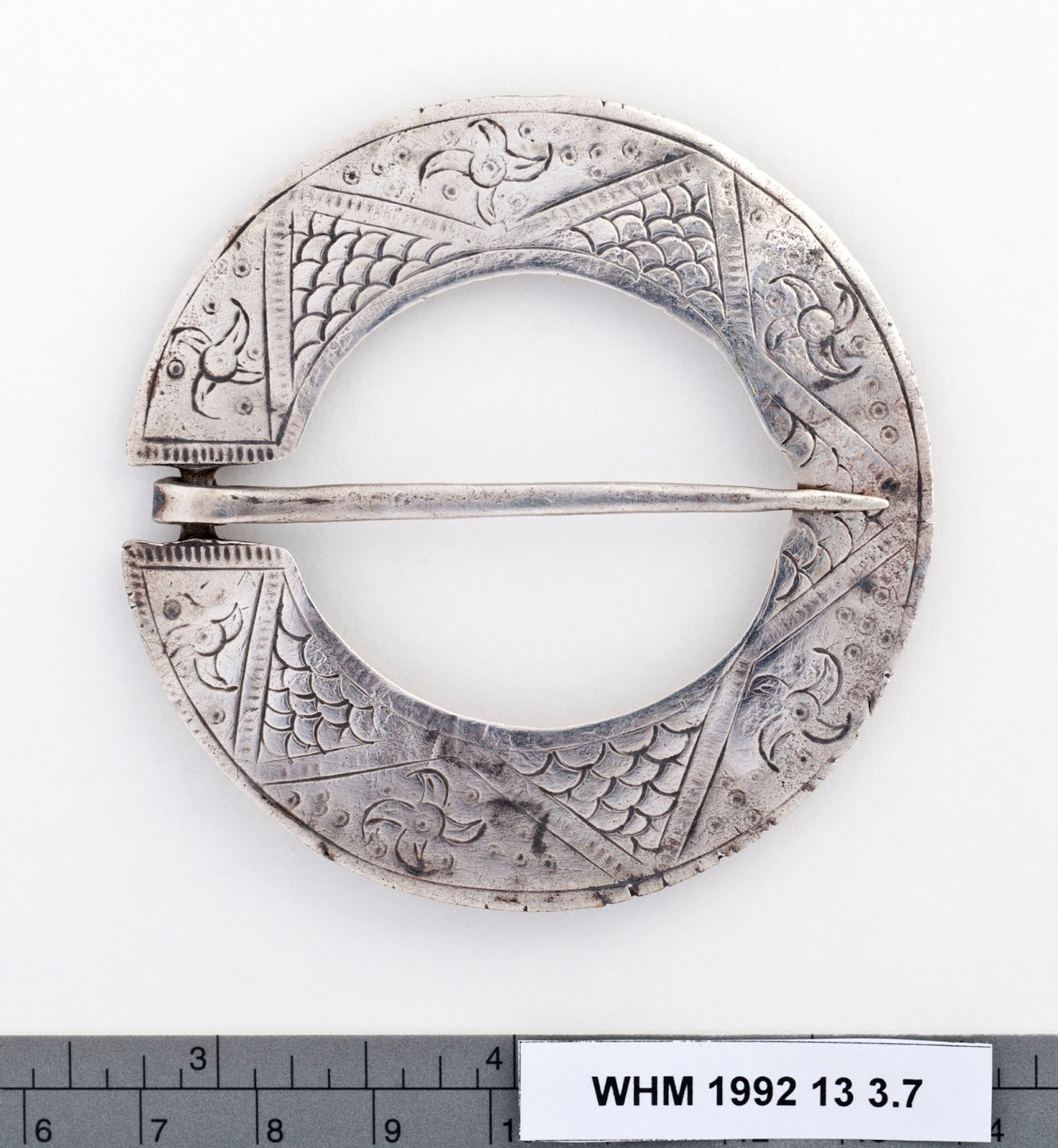
Silver Ring Brooch, West Highland Museum
Images
NMS objects © National Museums of Scotland
WHM objects  © Carsten Flieger 

Wednesday, 28 November 2012

Book Week Scotland: Hairy Tooth Fairy


A child losing a tooth is one of life's milestones and along with it comes the tradition of the tooth fairy. In Carmina Gadelica, Alexander Carmichael records a version of the tooth fairy custom which is still familiar to us today. As a postscript to the story, he also describes similar customs about cutting hair (hands up who still has a lock of hair among the family heirlooms?) and the threat of doing something which might stop you growing.

An Luch: The Mouse
The little boy or girl who lost a tooth said, ‘A luchag, a luchag, thoir dhomsa fiacaill gheal òir (no airgid) is bheir mise dhut fiacaill gheal chnàimh.’ ‘Little mouse, little mouse, give me a white tooth of gold (or silver) and I will give thee a white tooth of bone.’ (Or the bargain may be the other way about)

'Little dude' with his latest loose tooth from http://www.vintonville.com/little-dude/toothless/

After that the child placed the fallen tooth ‘ann am fròg a’ bhalla,’ in a chink of the wall of the house, there to remain until the mouse should replace it with the little tooth of white gold or the little tooth of white silver. And the boy or girl visited the chink many times a day to see if the little mouse had brought the promised tooth.

Is e an dochas dòlais 
A lònaich a’ bhaintighearn.
It was hope amid grief
That sustained the great lady.

-----

A luchag! a luchag!
A luchag bheag bhàidh!
A luchag! a luchag!
A luchag bheag ghràidh!

Thoir thusa dhomhsa
Fiacaill bheag òirgill,
Thoir thusa dhomhsa
Fiacaill bheag airghill,

Is bheir mise dhutsa
‘Na chomhnadh, ‘na dhàil,
Fiacaill bheag bhòidheach bhàn,
Fiacaill bheag ògain chual chnàmh,
Fiacaill bheag òighe chual chnàmh,
Fiacaill bheag ògraidh luath-ghàir.

Luch-fheòir or Field mouse from www.lifeonland.org.uk

Little mouse! little mouse!
Little mouse, kindly one!
Little mouse! little mouse!
Little mouse, beloved one!

Give thou to me
A little tooth gold-white,
Give thou to me
A little tooth silver-white,

And I will give to thee
In its stead, in return,
A little tooth of beauteous white,
A little tooth of boy, bone bound,
A little tooth of maid, bone bound,
A little tooth of youngster laughing loud.

Similarly when hair was cut, at the waxing of the moon, the child from whom the hair was taken placed a lock of it in the hole of a wall as high as the hand could reach. After that the little owner of the lock was to grow with the growing moon until the little hear reached as high as the little hand had reached before. The child went every now and then to measure the head against the hair in the wall. Those hopes! And those disappointments!

Phases of the moon from scienceworld.wolfram.com
Phases of the moon

The ‘luch fheòir,’ field-mouse, was believed to exert a bad influence. A child who stepped across a field-mouse would stop growing and would remain a dwarf. Hence to a small person of dwarfish form is said ‘Is tu thug an leum luideach thar na luch fheòir,’ ‘It is thou who gavest the clumsy leap over the field-mouse.’ ‘Is tu thug an leum luch,’ ‘It is thou who gavest the mouse-leap,’ that is, the little leap in growing.

To place the sieve on a child’s head had the same effect; hence the sayings, applied as those above, ‘Chuireadh an criathar air do cheann,’ ‘The sieve was placed upon thine head.’ ‘Is tu thug an leum criathair,’ ‘It is thou who gavest the sieve-leap,’ a small leap in growing.

References: 
Alexander Carmichael, Carmina Gadelica, (Edinburgh, 1941) pp. 18-19.

Images: 
Field mouse: www.lifeonland.org.uk
Phases of the moon: scienceworld.wolfram.com


Sunday, 4 November 2012

Donald Lamont: his Life and Work

Thousands of pages of undiscovered Gaelic prose – unread for many years, but now brought to light by the National Library of Scotland. The volumes in question are the Gaelic Supplement to the Church of Scotland magazine Life and Work, and they come from the collection of the Rev. Donald Lamont (1874–1958), who edited the Supplement between 1907 and his retiral in 1950. As Lamont states in the handwritten introduction to the first volume, any unsigned contribution was composed by himself.
 
Donald Lamont was a native of the island of Tiree. Like many able young Highlanders at the time, he was educated at Rainings School, Inverness, before going to the University of Edinburgh. Ordained minister in Glen Urquhart in 1902, he transferred to Blair Atholl in 1908, the parish where he remained, with the exception of a spell as a forces chaplain in World War I (he served at Gallipoli in 1915–16), until he retired from the pulpit in 1946. The Prose Writings of Donald Lamont, full of pithy, lively writings by a master of the Gaelic essay, was published as a volume for the Scottish Gaelic Text Society in 1960. His fellow Tirisdeach Professor Donald Meek sums up Lamont’s work as follows:
 
Under Lamont’s ceaselessly provocative pen, the Gaelic Supplement became the main vehicle for thematic and stylistic experimentation in Gaelic; it carried sermons, essays and short stories. Lamont had a particularly lively imagination, and was not afraid to create ‘factional’ characters and scenarios, and to use these to carry the message he wanted to communicate. He was obviously aware, to a remarkable degree, of the opportunity he had, as a clerical writer, to contribute constructively to the well-being of the Gaelic language. His concept of a Gaelic Supplement was not one that ran in the rails of ecclesiastical convention, restricted by doctrinal rigidity and enslavement to purely homiletic styles.

Here is a list of the Gaelic Supplements online:
 
 
Donald Lamont graduated M.A. from Edinburgh in 1898. Among his fellow classmates was none other than Alexander Carmichael’s daughter Ella (1870–1928). A small notebook, numbered CW22, is, according to the cataloguer the Rev. John Mackechnie, in Lamont’s hand. It contains a poem to Ella, about whom Donald Lamont was to write so movingly in Carmina Gadelica iii, xxi–xxiv, beginning:
 
Ella Carmichael was my friend for more than thirty years, my first sight of her being in the Quadrangle of Edinburgh University, when she came to attend Professor Mackinnon's Celtic class, and my last when I went to see her a few days before her death ; and in all these years she was one of the half-dozen friends that I liked best in the world. She was one of those people with whom it is easy to keep one's friendship in good repair, even though one does not see them often. There were fairly long periods of time within these thirty years when I had but few opportunities of meeting her, but that did not matter — the door of her heart and home always remained unlatched, and one could enter without formality or apology and take up the threads of intimate talk where they had been dropped years before.
 
She seemed to me to have changed less between young womanhood and middle life than any other woman I have known, so that one's first impression of her never had to be revised even in small details. This applies even to her physical appearance, as well as to her mind and character. In the middle 'nineties Ella Carmichael was a very beautiful young woman, singularly gracious and dignified, with an air of distinction and charm. …
 
For our Gaelic readers, we give a transcription of the poem’s contents below
 
To
Ella C. Carmichael
this poem
is
respectfully dedicated.
 
/
 
Och! och! ’s truagh mar tha mi
’S mi smuainteachadh ort
’S mo cheann ann an tuaindeal
’S mo chridhe cho goirt.
 
O na faighinn mo dhurachd
’S mi shiubhladh air falbh
’S cha bhithinn na ’b’fhaide
Ri obair cho searbh.
 
’S ged tha mi n’am shuidhe
Ann an cuideachd cho math
Far bheil iorghuill is cabhag
Am meag fhear agus bhan
 
/
 
Tha duin’ ionnsuichte seolta
A comhpairteachadh sgoil
Ach ’s mor m’fheagal gu bheil ‘Seoras’
Le mor fhoghlum air bhoil’
 
Ged tha mise ’s an ait’ so
Ann an cruth ’s ann an dòigh
Tha mo smuaintean ’is m’aire
A ghnàth air an oigh
 
Tha i maisach ’is sgiamhach
Agus cùinn [ciùin] anns gach dòigh
Ion-ghradhach ’is coimhneil
Neo-dhàn’ agus còir
 
/
 
B’e mo dhurachd bhith dluth dhi
Ri comhradh ’s ri ceòl
’S cha ’n iarrainn a fàgail
Fhad sa bhitheas mi beo
 
Ach tha n’uine dol seachad
Le cabhag ro-dhian
’S ann a seachduin no dha
Cha’n fhaic mis’ a fiamh
 
Se ni tha g’am fhagail
Cho bronach ’s cho truagh
Bhi caithibh na h-ùine
Cho fada so uait
 
/
 
O nach bochd nu[a]ir tha ’n samhradh
A nis a tighinn cho dlùth
’S an geamhradh dubh dorcha
A tionndadh a chùl
 
Gu feum mis’ mar an ceudna
Bhi fagail Dhunèdin
’S dol air imrich leam fhein as
Gu tìr a tha céin
 
Cha’n e bhith fagail Dhunèdin
Le mhaise ’s le sgèimh
A tha cho cràiteach ’s cho duilich
O ’s fhada ma ’s e
 
/
 
Ach tha ’n tìm gu bhith seachad
’Is feumaidh mi sgur
Bho’n tha fhios agad fhein air
Mo thinneas gu túr
 
Gach sonas ’is solas
Gu robh gu brath na do sheilbh
’S gu ma fada fada beo thu
Ann a slaint’ agus foirm
 
Leig leam so a ràdh ruit
Gu càirdeil ’s gu fior
Gu bheil agamsa gràdh dhuit
A tha domhain agus sior
 
/
 
Slàn-leat ma tha ’n drasda
’S gun deanadh gràdh agus seirc
Thusa leantainn a’n comhnuidh
‘Gach la chi ’s nach fhaic’
 
Feumaidh gur e Seòras MacEanruig no George Henderson (1866–1912) a th’ ann an ‘Seòras’. Thoiribh an aire mar a bha an Laomainneach ag obair mar Examiner ann an Cànanan agus Litreachas Ceilteach ann an Oilthigh Dhùn Èideann eadar 1903 agus 1906.
 
Sources:
Donald Meek, ‘The Gaelic literature of Argyll’, Association for Scottish Literary Studies
Donald Lamont about Alexander Carmichael, here and here.
 
Image:
Eaglais Sgìre Bhlàr Athall/Blair Atholl Parish Church

Tuesday, 7 August 2012

An April Fool gone wrong?

In the national census taken on the 2 April 1871, Alexander Carmichael is recorded as living in Trumaisgearraidh Manse in the north-east of North Uist. Making up the household were his wife Mary Frances; their 7-month old daughter Elizabeth or Ella; Alexander’s 17-year old niece Catherine Carmichael from Lismore, clearly staying with them in order to help with the new baby; their 22-year old domestic servant Catherine MacAulay; and their 18-year old nurse Mary MacInnes, both local girls from North Uist. The Carmichaels’ other child, three-year old Alexander or Alec, was then staying with their good friend John MacDonald (1826–88) at nearby Newton Farmhouse. Recorded separately as head and only member of his own household, but also living in the manse, was the minister, the Rev. Donald Maclean (c. 1835–1914), a bachelor from Tiree.

The Carmichaels had not been living at Trumaisgearraidh for long. The young family had probably moved there from Alexander’s bachelor lodgings in Lochmaddy soon after they had returned from their stay in Lismore, where Ella was born on 9 August 1870. The first mention of Trumaisgearraidh in Carmichael’s papers dates from 21 November 1870: there, in the evening, Carmichael recorded two songs from ‘Mr Ranald Macdonald Taransay Harris’ [CW116/132–3]. Ranald or Ronald MacDonald (c. 1830–1913), sheep farmer, Paible House, had shown Alexander round the island during his visit there earlier that summer.

Less than six months later, however, on the 15 May 1871, Alexander Carmichael is recorded as writing a letter saying that he is preparing to leave Trumaisgearraidh Manse [NRS GD403/90/1]. What has happened in the meantime? A recently discovered note in the Robert Craig Maclagan MSS in the School of Scottish Studies suggests why the Carmichaels might have made such a hasty move.

The note forms part of a detailed, illustrated, and rather idiosyncratic folklore tour through Glen Lonan east of Oban, a beautiful part of Lorn then well-known for its Ossianic connections. The tour was undertaken on 20 May 1895 by the Rev. Niel Campbell (1850–1904), minister of the nearby parish of Kilchrenan and Dalavich, who, between 1893 and 1898 collected lore for the Edinburgh surgeon Robert Craig Maclagan (1839–1919), himself compiling a vast archive of Highland tradition, custom, and belief for the Folklore Society in London.

The Rev. Campbell’s guides at the farm of Torinturk in the glen were ‘two brothers of the name of Morrison from Uist. These are on the point of leaving it. I forget their Christian names but call them A. M. and B. M. respectively’ [Maclagan MS 1260, ‘1’]. After a spell as a sailor, John Morrison (c. 1842–1909) had turned to diamond mining in South Africa, making enough money to take on the lease of the farm of Torinturk with the help of his unmarried brother Donald John (b. c. 1843). On 21 January 1882 John had married Marion MacVicar (b. 1857) from Boraraigh. In addition to a boy who had died in infancy, the couple had six sons when the minister paid his visit: nine-year old John, Alexander or Sandy, Neil, Donald John, and two-year old William.

Among the items Campbell recorded was the following, from ‘B. M.’:

Latha-na-gogarach [Campbell,with his Perthshire Gaelic, has misunderstood gocaireachd here]

This was reciter’s vocable for what we call in Perthshire Latha na cuaig [‘the day of the cuckoo’]. He told a story of Mac-ill-mhìcheil [Carmichael] a folk lore collector who sent a minister to whom he (reciter) was a servant air gnothach na cuaige [‘the cuckoo’s business’] but the story was only to effect that the minister having been sent to [the] factor could never forgive Carmichael. Collector notes it for vocables only.

[marginal note: Reciter thinks minister was fully justified in being irreconcilable.]

[Maclagan MS 1260, ‘16’]

The Morrisons had been brought up in Bhalacuidh or Vallaquie, North Uist, just across the little ford of Faoghail Bhalacuidh from Trumaisgearraidh. Seventeen-year old Donald John is recorded as living there in the 1871 census: he must therefore be Campbell’s ‘B. M.’

Carmichael certainly knew the family. He recorded a New Year’s Blessing, Beannachadh Bliadhna Ùir, from their mother Ann Morrison née Ross (c. 1811–93) from Skye [Carmina Gadelica i, 158–9], as well as Mo ghaol, mo ghaol, mo ghaol fhéin thu, a praise song to her future husband by Janet MacLeod, second wife of Malcolm MacLeod of Raasay, better known as Baintighearna Dhubh Osgaig, whom Johnson and Boswell met during their 1773 tour of the Hebrides [CW87/37]. This item was recorded on 14 September 1885, when Carmichael was back in Uist and Barra for an autumn visit. Alexander Carmichael must have been deeply moved by the song: he inscribed its first verse on the frontispiece of the copy of Carmina Gadelica he presented to his wife. From Ann’s husband John (b. 1805) he wrote down a little ‘praise-poem’ for a ‘good husbandman, diligent and God-fearing’, Mac Shiamain [CG iv, 320–1]. Carmichael also may have visited his son John in Torinturk itself, maybe during one of his visits to Taynuilt: the very last item in the last volume of Carmina Gadelica is a list of the names the farmer had given his cattle [CG vi, 271]. On the other hand, he may have visited the family in Edinburgh after they had left Torinturk and moved to Newbattle Terrace, Morningside: this may be implied by a piece of oral tradition telling of how John’s son Alexander (1886–1915) showed Carmichael a piece of Ossianic lore he had written down while on holiday at Rucaidh in North Uist.

If the account of ‘B. M.’ is true, Alexander Carmichael had sent the Rev. Donald Maclean on an April Fool’s errand to the factor of North Uist, none other than his friend John MacDonald of Newton, who had occupied the post since 1855 when Sir John Orde purchased the estate. A newcomer to the parish – he had been ordained on 13 May 1869 – Maclean would have been none too happy about being made the butt of a joke by his new lodger, not just in front of the factor but before the entire local community. We might go further and suggest that Maclean could not suffer Carmichael to live in the house with him any longer, and gave him and his family their marching orders. One wonders what Mrs Carmichael, faced with the prospect of homelessness with a young son and a new baby, thought of her husband’s wayward sense of humour. When the census taker visited the household on 2 April, he may have detected a certain froideur in the atmosphere at Trumaisgearraidh Manse.

A final thought: on CG ii, 74–5, is a protective charm, Am Fionn-Faoilidh, ascribed to ‘Peigidh Maclean’, probably Margaret Maclean (b. c. 1794), of Trumaisgearraidh, North Uist. Evidence from the notebooks, however, suggests that the original was obtained, under the title Òra Ceartais or ‘Charm for Justice’, from Mary Stewart (c . 1801–77), ‘Màiri Bhreac’, the dairywoman from Malacleit who, on 19 March 1877, shortly before her death, gave Carmichael eight charms [CW108/6]. In the original ‘blueprints’ for Carmina Gadelica, the charm is also ascribed to Màiri Bhreac [CW124 fos.2,5]. There is no mention of Peigidh Maclean. Could it be that the reascription to an old woman in Trumaisgearraidh of the charm, with its pledge to ‘drain wrath empty’, ‘to preserve to me my fame’, and to come between ‘ill-will or ill-wish in mine enemy’, is a private joke by Carmichael and his family, remembering his own experience nearly three decades earlier at the hands of the unamused local minister?

And two final connections: firstly, working as the nurse for the Morrisons of Torinturk for a year around 1893 was the great traditional singer Marion Campbell (1868–1971), Mòr bean Néill, mother of Bean Eàirdsidh Raghnaill and grandmother of Rona Lightfoot. Donald Archie Macdonald recorded her praising John Morrison of Torinturk (‘’S ann a bha an duine còir’) on SSS SA1967/136.

Secondly, just before Mòr left Torinturk, the Morrisons had another baby son. William (1893–1961) was better known as ‘Shakes’ Morrison, hailed by Chips Channon as the great white hope of the Conservative Party in the early thirties, Speaker of the House of Commons between 1951 and 1959, and Governor-General of Australia for the year until his death. The title chosen by the only Gaelic-speaking Speaker: Viscount Dunrossil of Vallaquie, North Uist.

Image: Trumaisgearraidh Manse and the now roofless Telford Church, last used in 1941. Ar taing dha Iain Eàirdsidh Iain an Dùin a bha cho coibhneil ann a bhith ag innse dhuinn mu eachdraidh na sgìre is sinn air ar cuairt.

Additional Reference: Peter Morrison, ‘Alexander Carmichael and the Morrisons of Rucaidh’ in Domhnall Uilleam Stiùbhart (ed.), Alexander Carmichael: Life and Legacy (Port of Ness, 2006), 181–2.

Saturday, 16 June 2012

A keening for Roderick MacPhee - 2

The mysterious drowning of a seaman as skilful and well-known as Roderick MacPhee clearly gave rise to a whole host of rumours and speculations in the islands. This was especially the case at a time of the year when Barra was bursting at the seams with outsiders – fishermen, coopers, and gutting women – involved in the rapidly expanding herring industry, then newly established in Castlebay. An item in the Inverness Advertiser on 14 June states that nearly 900 fishing boats were in the area at the time, with at least 40,000 barrels of herring despatched from the island during the week ending 11 June, conveyed on twenty steamers to Glasgow, Liverpool, Leith, and other ports (incidentally, the Glasgow Herald on 18 June states that 19 cargoes of herring had been despatched from Stornoway that week ‘for various parts of the Continent, chiefly Stettin, Hamburg, and St Petersburg’). The Inverness Advertiser article declares that ‘20,000 strangers’ were employed in the fishing: we’re not entirely sure about this number, but there certainly must have been more than 2,000!

The Glasgow Herald’s article of 4 June drew the following immediate response:

The Boat Accident off Barra Head.
                                                4th June.
   Sir, – I am astounded to see the loose statement, copied in your paper of to-day, with regard to the Barra Head Accident. It is evident that the writer, whoever he may have been, was not aware of the circumstances, or he would not have made misstatements which can only cause anxiety to relatives and friends. To show how ridiculous the whole paragraph is, allow me first to state that the gentleman who hired the boat was safely landed at Pollockawe [‘Pollacharra’ must have been the original] in South Uist, that it was on the return journey that the crew of two men and a boy were lost. The statement of ‘a few hours afterwards … the boat was found,’ is totally without foundation, as it was not till the following morning (Sunday[ 29 May]) that the accident was known to have taken place. The last sentence of the paragraph only makes confusion worse confounded. I may further state that Rory MacPhee was not the lighthouse keeper, but only the man who had charge of the Lighthouse Commissioners’ boat. A little reflection might have shown that a lighthouse keeper could not be cruising about in a boat and attending to his duty at the same time.
   And now, Sir, to justify my remarks on this subject, and to show that I have good cause to be annoyed at the blundering account given in your paper, allow me shortly here to state that I was one of the gentlemen who crossed in Rory MacPhee’s boat on the day of the accident, and am acquainted with the particulars. – I am, &c.,     B.

A more accurate report was printed in the Inverness Advertiser of 14 June, and excerpted in the Scotsman the following day:

   Melancholy and Fatal Boat Accident at Barra. – A melancholy occurrence took place off Barra Head light-house on Saturday, the 28th ult., by which three persons were drowned – viz., Roderick Macphee, the light-house ferryman, upwards of 40 years of age; Donald Macneil, about 38 years of age; and John Macneil, about 16, both of the latter boatmen. On the return journey with two gentlemen tourists, who had crossed the sound between Barra and Vatersa, the boat appears to have foundered in the surf near the rocks, as it was found a few hours afterwards with keel up, and sail set, but no trace of the unfortunate occupants. Both of the deceased men have left wives and families, who were dependent on them for support. Some contributions have already been received in their aid; and it is to be hoped a generous public will not overlook this unfortunate case.

But who was the mysterious gentleman ‘B’ who had written the letter to the Glasgow Herald? His surname is given in the following report in the Inverness Courier of 16 June:

   The Boat Accident at Barra. – A correspondent sends us particulars of the sad occurrence at Barra, on the 28th ult. On that day the Barrahead lighthouse mail ferryboat, manned by the ferrymen – Roderick Macphee, Castlebay, Barra, aged 35 (an able and careful seaman, and a most obliging and respectable man); Donald Macneil, Island of Minglay, aged 38; and John Macneil, Elen [i.e. Glen], aged 16, with two gentlemen who had been visiting Barra-head, sailed from Castlebay by the east coast of the island, and across the Sound of Barra to South Uist. After landing the gentlemen there, the boat, with its crew, returned to Castlebay by the west coast of Barra, the wind blowing a stiff breeze from the east. Nothing further was heard of the boat until Monday, when some lobster fishers found it out at sea under water, with the sails set, about two miles to the west of the entrance of the sound, between Vatersay and Barra. They secured the sails and bowsprit, but as the day was stormy they abandoned the boat. None of the bodies have been found. It is believed that in sailing over one of the sunk rocks at the entrance of the sound, a sea broke, filling and capsizing the boat. Macphee has left a widow and five children. Immediately on hearing of the occurrence, Mr Brown, one of the gentlemen who had taken his passage in the boat from Barra, sent the widow and children £5. It is hoped that the public will not overlook this unfortunate case.

As we shall read in the next blog, the two gentlemen ‘had been on a scientific excursion through the Southern Isles of Barra’. ‘Mr Brown’ must be the well-known naturalist and ornithologist John Harvie Brown (1844–1916), who had not yet added a hyphen between his two surnames. His companion was Captain Henry Wemyss Feilden (1838–1921), 4th King’s Royal Regiment, who led a rather extraordinary Victorian life worthy of (a heroic) Harry Flashman and who was later described by his friend Rudyard Kipling as ‘the bravest man I ever met’. On 27 September 1870 a paper by Captain Feilden was read to the Glasgow Natural History Society, ‘part of the journal of a tour in the Outer Hebrides made by Mr Harvie Brown and Captain Feilden during the summer [of] 1870. The paper contained many interesting ornithological notes, and descriptions of shell mounds visited by the author.’ Excerpts were printed in the Proceedings of the Natural History Society of Glasgow, ii (1869–75), 58–60. Embarking upon a paper about the antiquities of Uist, Alexander Carmichael would reminisce:

   In the summer of 1870 Captain Feilden of the [     ] made an ornothological [sic] tour through the Outer Hebrides. I had the pleasure of his acquaintance and his subsequent correspondence upon subjects of mutual interest. [CW429 fo.1]

Carmichael had also embarked upon a long-lasting correspondence with John Harvie Brown. Letters from Carmichael in the latter’s archive, now in the National Museums of Scotland, date back to at least March 1871, when the ornithologist asked Carmichael to prepare ‘a list of the Gaelic names of birds.’

References: CW429 fo.1.

Feilden, Capt. H. W. 'Journal of a Tour through the Outer Hebrides in 1870', Proceedings of the Natural History Society of Glasgow, ii (1869–75), 58–60.

Glasgow Herald, 6 & 18 June 1870; Inverness Advertiser, 14 June 1870; Inverness Courier, 16 June 1870; Scotsman, 15 June 1870.

Images: J. A. Harvie-Brown, one of the last two men to see Roderick MacPhee and his crew alive.

Tuesday, 8 May 2012

A Place-Name Weekend in Oban

The Scottish Place-Name Society conference at Oban last weekend was a real pleasure to attend: the town was looking its best in the early summer sun, there was an excellent selection of papers, and, to round things off, we had a fascinating trip out and about in the surrounding countryside of Muckairn and Glen Lonan, in which Alexander Carmichael recorded so much during the 1880s and 1890s.

My paper, on the local folklore collections made by Carmichael and the Rev. Niel Campbell (1850–1904), Church of Scotland minister of Kilchrenan and Dalavich, dovetailed nicely with the one given by Brigadier John MacFarlane. Drawing upon voluminous papers compiled by his family in Taynuilt over several generations, about history, folklore, songs, poetry, and place-names, John offered a precious glimpse into a time, not that long ago, when Muckairn was an overwhelmingly Gaelic-speaking parish. Today, there’s only himself left of the seann seòid. Ach nach math gu bheil ur leithid ann!

Denis Rixson, well known as historian of the Rough Bounds and Small Isles, offered us a rigorous wrestle with the fascinating and controversial question concerning the meaning and extent of traditional land valuation assessment units such as merklands, pennylands, ceathramhan, davachs, and more, throughout the western Gàidhealtachd. A fundamental problem was summed up in his astute comment that there is absolutely no guarantee that the extent of farms and townlands remained static throughout the centuries. (If we factor in recent historical findings concerning the nature and influence of environmental changes and population mobility and variablity over the centuries, the challenge of synthesising medieval land assessments with later documentary evidence might be even trickier than we had hitherto imagined.)

Michael Hance of the Scots Language Centre explored contemporary usages and manifestations of Lowland Scots in place-names and toponymy, making the perhaps unanswerable point that if we have, for instance, Linlithgow and Gleann Iucha on a public sign, should there not be a place for Lithgae too?

Professor Carole Hough of Glasgow University gave an exciting overview of the new AHRC-funded Scottish Toponymy in Transition project there. Having nearly finished the Place-Names of Fife, the project is on a roll. The next focus for the team is Clackmannanshire and Kinross-shire, with additional research planned on Cunninghame (North Ayrshire), Berwickshire, and Menteith, subject of Peter McNiven’s recent excellent PhD thesis.

One personal highlight was the bus trip next day around Muckairn and Glen Lonan, led by John MacFarlane. It was intriguing to see the beautifully picturesque but perhaps less epic reality behind the heroic landscape summoned up by Alexander Carmichael, a world of Ossianic champions, clan strife and legend, battles prophesied or in the past, a cradle of great men such as Iain Lom, and the supposed homeland of the ancestors of Robert Burns and John Ruskin.

As one extra bonus, I was able to spend Sunday afternoon in the newly-opened 1745 House at Dunollie Castle, poring over the MacDougall Papers. This exceptionally important archive, together with the frankly amazing Hope MacDougall Collection (undoubtedly to feature in blogs to come), should make visits to Dunollie compulsory for all those with an interest in the people, history, and culture of the western Highlands.


John MacFarlane talking the group through the site of the Battle of Daileag, fought between the MacDougalls of Dunollie and incoming Campbells.


‘Daileag was an ideal field of battle in the time of days of hand to hand encounters…’ [CW504 fo.35v] Cruachan Beann in the background: ‘’S iomadh linn bhon d’fhuair iad còir/Air a’ bheinn is bòidhch’ r’a faicinn.’


Airds Bay – the cottage where the Carmichaels lived from 1899 to 1901 is on the left-hand side behind the trees. 'Deagh Choimhead' in the background.


A sheila-na-gig in her latest home in the walls of the most recent Taynuilt parish church.


Dùn Tamhnachan/Duntanachan, where the Rev. Archibald Clerk (1813–87) of Kilmallie was brought up.


Clach Dhiarmaid at Tòrr an Tuirc. In the foreground, so legend avers, the enclosure in which the Ossianic hero was laid to rest.

Thanks to everyone involved in the Scottish Place-Name Society conference, especially Dr Jake King who organised the conference - and also to Catherine Gillies, Project Manager at Dunollie Castle.

Thursday, 1 March 2012

Tracking Down Treasures

Last Sunday the team made their way through beautifully snowy glens to Fort William to carry out a significant piece of work for the project. Fort William is home to the West Highland Museum, where the majority of the artefacts collected by Alexander Carmichael are held. Indeed, the museum has looked after the collection for a long time, first taking it in as a loan from Michael Carmichael, one of Alexander's grandsons, in 1948 before it was gifted to the museum in 1992.

Domhnall Uilleam placing a winnowing riddle for Carsten to photograph


In addition to research, this phase of the project aims to catalogue all the objects collected by Carmichael. In order to make a useful online catalogue photographs are required, so we hired Highland photographer Carsten Flieger to work with us. Now, the collection is complicated enough, with Uist plaids, Jacobite tartans, bronze brooches, bone pins, fossils, wool carders, sea bean charms, oil lamps and swords to contend with without adding in the fact that a large proportion of the collection is on display. Luckily for us museum volunteer and former curator Sally Archibald had given up her time to help us identify objects in storage and carefully remove and replace objects on display. No mean feat given the weight of some of the display cases - it's not just the tango that takes two.

Guinevere proving the worth of a porridge breakfast with the charms display case


The variety of objects, their dispersal throughout the museum and the need to consult different lists compiled over the years made the task quite complicated, however we soon had a production line of sorts going. Working from the largest objects to the smallest, prioritising items on display and trying to keep things made of similar materials together were key. Over the five days we were in Fort William, of the 200 or so items which were produced Carsten took over 300 photographs. What we've seen so far is first-class and we can hardly wait to see them all properly: ruddy-red tartans, shiny sea beans, ferocious flax combs. However, we're going to have to wait as we still have some objects to to photograph, which, now we have some experience, we know will probably take another two days.

Carsten and the bright lights making sure everything looks as it should

We are grateful to the West Highland Museum, especially manager Colleen Foggo for letting us work for as long as possible each day to get through the material and for being patient with us as we roved the different floors and rooms of the museum seeking out Carmichael-collected objects. We are indebted to Sally Archibald for the extraordinary energy and work she put into locating and identifying items.

Sally and Kirsty try to identify a brooch

The museum re-opens following its winter closure next week, so if you're in Fort William, do go in as it's well worth the time.

Monday, 28 November 2011

Oot an' Aboot

It's been a busy few weeks for the team as Phase 4 fever takes holds. The objects which we are cataloguing and researching are held either by The West Highland Museum (WHM), in Fort William or by the National Museum of Scotland (NMS) a few minutes up the road from the office, all of which means we've had to go oot an' aboot.

Two weeks ago, we'd a very productive afternoon with Pam Babes, Collections Development Manager and Angus Kneale, Collections System Manager at NMS looking at their cataloguing system and talking about the best approach for listing Carmichael's objects. We also got a better idea of the material we'll be dealing with there, most of which is tartan and the oddest of which is crossopus fodiens - a water shrew.


Next on the list was a trip to meet Màiri Mooney, curator at The West Highland Museum and to clap eyes on the considerably larger number of items in their Carmichael collection. The weather was hardly kind as we stepped off the train into ankle-deep puddles and driving rain but the welcome was very warm when we arrived at the museum. Many objects from the collection were out on display anyway, so we were able to start matching them to our list, which was originally drawn up to value the collection in the late 40s. What an array of artefacts! Everything from fossils to Jacobite clothing to charms to domestic tools and of course brooches. Many, many brooches. Màiri took a great deal of time with us and let us have the run of the museum for the day, so that we could plan for our next visit. High on our agenda is photographing the items - the current list has around 250 objects, so the task is a considerable one. Personal favourites from the objects we were able to see were a targe, a riding cape and knotted wool for Eòlas Snàithle [Charm of the Threads]. Seeing unfamiliar objects which have been mentioned in now very familiar manuscripts was an enlivening experience altogether.

On my own way home I took a detour to visit the project's friends at Comann Eachdraidh Lios Mòr. I mention this simply to allow me to post a picture showing how beautiful it was on the Tuesday morning!


Reference: Carmina Gadelica, vol. IV (Edinburgh, 1941) pp. 166-167.
Image 1:  Kirsty M Stewart, Màiri Mooney and Domhnall Uilleam Stiùbhart at West Highland Museum.
Image 2: Looking towards Ben Nevis from the north end of Lismore.

Friday, 2 September 2011

St Donan’s House, South Uist

Eilean Donan Castle
From whom Alexander Carmichael got this snippet of information concerning St Donan’s House, South Uist, is not now known with certainty. Archaeological remains, particularly those with an ecclesiastical connection, were of great interest to the collector, something which is reflected in his folklore notebooks. Aside from providing rough measurements of the actual site, Carmichael then proceeds to give some traditions about it stating that the saint is said to lived there. Mention is then made of the nearby township of Kildonan – where the museum is now located – and how it was cleared during the 1830s. Before this rather sad event, Flora MacDonald, the most famous Jacobite heroine, is said to have lived in this township after she had separated from her husband, Allan MacDonald of Kinsburgh (c. 1720–1792), who is said to have come to visit Flora in his dotage.

St. Donans house in Eilean Donain
L[ength] 50 x 26 feet with several surrounding ruins
Length of Isle 70 y[ar]ds. B[readth] 50 yards. This isle
is about 25 y[ar]ds from the next isle which is ab[ou]t
50 y[ar]ds from Claddh [sic] Donain. Cladh Donain
is a peninsula with a no of ruins and that
of a chapel & altar and the font in a herds
house at Milton & used as a crotag. Isl[e]
Donain is a small gre[e]n fertile isle field
of nettles & viratus Alba. St Donan is said to have
lived here & the the [sic] large ruin is called ‘Taigh-
Dhonnain’. Graves and caibeil are in the
Peninsula of cleadh [sic] Don[ain]. Near by is the hamlet
of Kildonain the ruins of many houses fr[om] which
the people were ousted ab[ou]t 40 y[ea]rs ago. Beautiful
land now a sheep track. Ab[ou]t 20 tenants
Flora MacDonald is said to have lived here
left her husband fr[om] jealousy.
Alain Chi[n]sburgh came to Lochaoineart and
was so infirm with rheumatism & flesh & age
that he had to be carried upon a cra-leaba to Bornish
where he remained that night and proceeded next day
to Kildonan to Flora’s house. How long they remained

St Donan, a Columban saint, is closely associated with one of the Small Isles, namely the Isle of Eigg, where he suffered the death of a martyr on 17 April 617. Tradition says that this day was being observed as Easter Sunday. The Felire of Oenus the Culdee says (in translation):

“With the festival of Peter the Deacon,
To glorious martyrdom ascended
With his clerics of pure lives Donnan of cold
Eigg.”

Many are the place-names associated with St Donan, ranging from Carrick, Loch Garry, Kintyre, Arran, South Uist, and, of course, Kintail. The iconic Eilean Donan Castle situated on the island of St Donain is a familiar site and has been used in many films through the years such as The Highlander and as the Scottish HQ for MI6 in the James Bond movie The World is Not Enough. But don’t be fooled by the way it looks: it was restored during the twentieth century (completed in 1932 after twenty years of restoration work) from the ruins of a fortified structure which dates to around the thirteenth century.

Reference:
CW150/82, ff. 55v–56r.
Image:
Eilean Donan Castle.

Stone whorls WHM 1992 13 2.4

Stone whorls WHM 1992 13 2.4
Stone whorls collected by Alexander Carmichael, held by West Highland Museum (ref. WHM 1992 13 2.4). [© carstenflieger.com]